

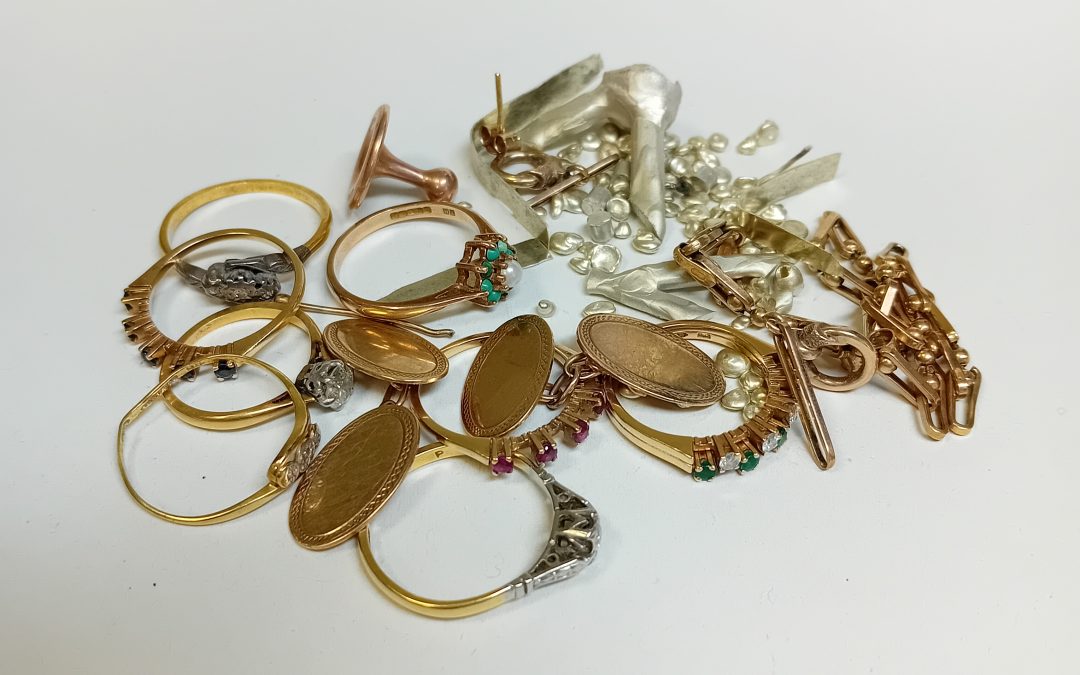
One of the major criticisms levelled at recycled gold has always been that new gold can enter the recycled supply chain.
This is because of a number of reasons:
- The jewellery industry mass produces and melts down what it doesn’t sell. What was new one month can be recycled very soon ofter.
- If bullion dealers buying scrap are willing to turn a blind eye, they newly made jewellery (often distinguishable because it’s very heavy) can be traded in for recycling
- There’s no traceability.
That’s not to say that there aren’t good recyclers out there, there are, but there are also ways for the unscrupulous to get new gold from dodgy sources, into the recycled supply chain.
I think it’s important that when we look at ethics in jewellery, we also look at sustainability. None of us can deny the current climate crisis (or some people do, but then you’re unlikely to be reading this blog). We can’t just keep mining, the emissions and energy use are huge. So, I wanted a better, more traceable recycled gold and this is what I do:
- I buy old jewellery at auction – the broken and worn out pieces.
- I dismantle everything and remove the stones (plans afoot for those, watch this space), then I send them to a refiner, here in the UK, who refines them (completely seperately) to pure gold. The exact same process new gold goes through once it’s above ground.
- I can then alloy it into whatever colour or carat I need.
This is more time consuming and more of a faff when compared to just ordering gold online, BUT, it gives me a much higher level of traceability.
I know the age (by checking the hallmark) and I can tell it’s had a life (you can see the years of wear). I know this is old gold.
It doesn’t make it perfect, but it is a recycled gold without the pitfalls of the commercially supplied version.
I’d love to know what you think
Lisa